Preserve Critical Expertise
Capture critical knowledge before it walks out the door.
When your most experienced employees leave, decades of operational knowledge can leave with them.
Pinyon Learning helps organizations capture that expertise and transform it into practical resources that support training, operational continuity, and future workforce development.
“Call Billy.”
-
Company A services major commercial, military, and government clients. When something goes wrong, the clock is ticking. Operations are disrupted, schedules slip, and millions of dollars—or more—may be at stake.
-
For one particular line of products, the answer is simple:
"Call Billy."
Billy has seen it before. He knows what to look for, what to avoid, and how to troubleshoot problems that aren't covered in the manuals. Time after time, he delivers under pressure. Problems get solved. Operations continue. Customers stay happy.
-
Until one day Billy retires.
Others step in, but they have less experience. Repairs take longer. Mistakes increase. Rework becomes more common. Small details get missed. The work still gets done—but not with the same speed, consistency, or confidence.
-
Every organization has a Billy—or several of them.
Their expertise goes beyond documented procedures. Over the years, they've accumulated the know-how, judgment, shortcuts, warning signs, and lessons learned that keep operations running smoothly. Much, if not all of that knowledge exists only in their heads.
Organizations often discover the value of that expertise only after it walks out the door.
Why Expertise Is Different from Information
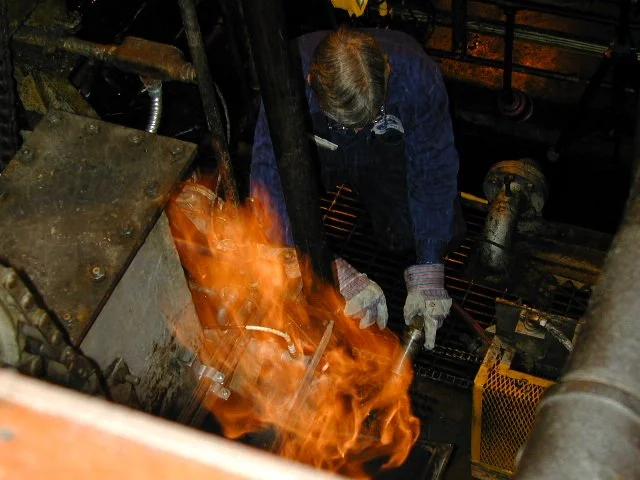
An experienced operator removing parts from a carburizing furnace.
Most organizations have documentation. They have procedures, manuals, and technical references.
What’s often not documented? Practical expertise that experienced employees develop over years of solving problems in the field.
That expertise includes judgment, troubleshooting techniques, historical context, and the countless small decisions that aren't written down but keep work moving safely and efficiently.
When experienced employees retire, transfer, or leave the organization, those insights often leave with them. New employees may eventually develop the same expertise—but only after years of trial, error, and mentoring.
Capturing that knowledge before it is lost helps organizations shorten learning curves, improve consistency, and preserve the experience that keeps operations running smoothly.
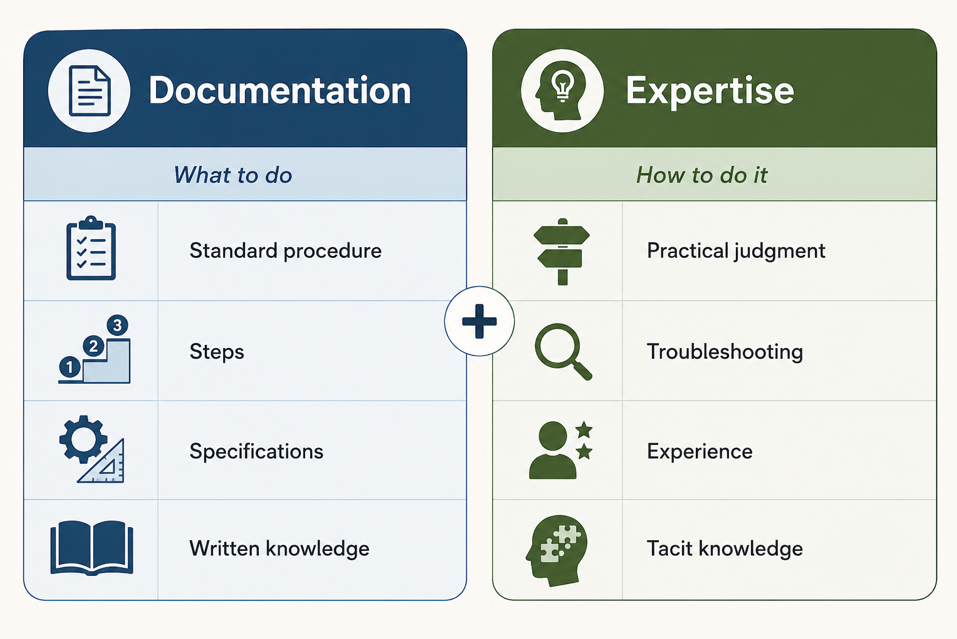
Expertise is more than documented procedures. It includes the practical knowledge, judgment, and experience that people develop over years of doing the work.
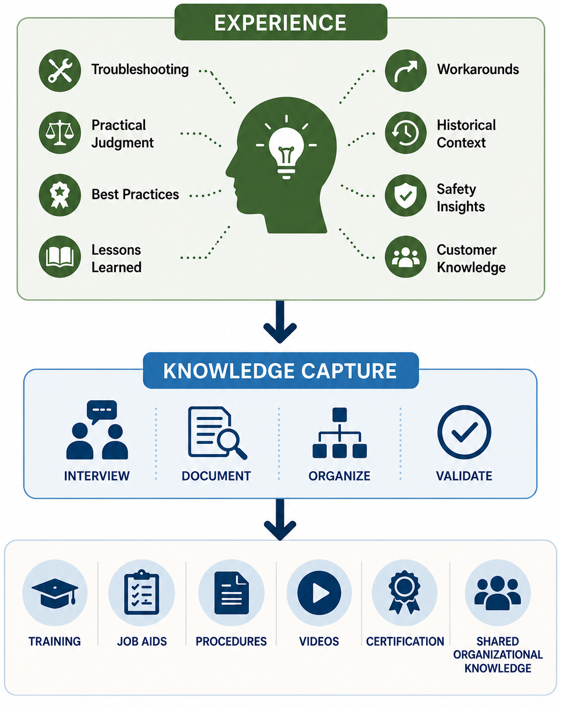
In your organization, critical experience might look like:
-
Recognizing abnormal machine sounds
Diagnosing recurring equipment failures
Machine setup techniques
Preventive maintenance insights
-
Troubleshooting customer equipment
Repair techniques developed through experience
Identifying likely failure causes
Efficient diagnostic methods
-
Lessons learned from previous projects
Process improvements
Vendor-specific knowledge
Design workarounds
-
Managing complex workflows
Handling exceptions
Customer-specific practices
Historical decision making
Common Signs Your Organization Is At Risk
One or two people are "the experts."
New employees constantly ask the same people for help.
SOPs don't match what actually happens.
Training depends on who is teaching.
Several key employees are nearing retirement.
Our Knowledge Capture Process
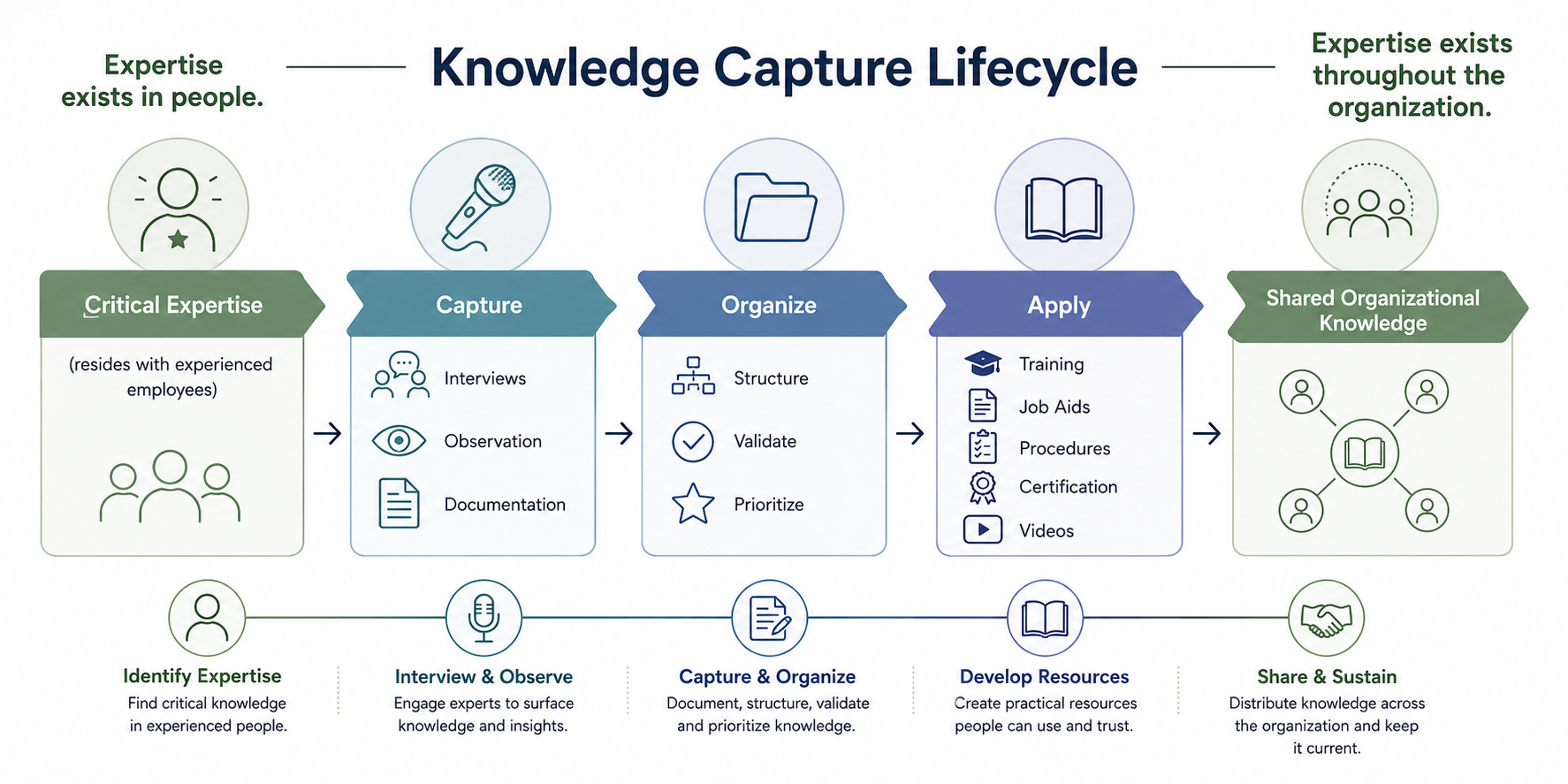
A few related engagement examples:
-
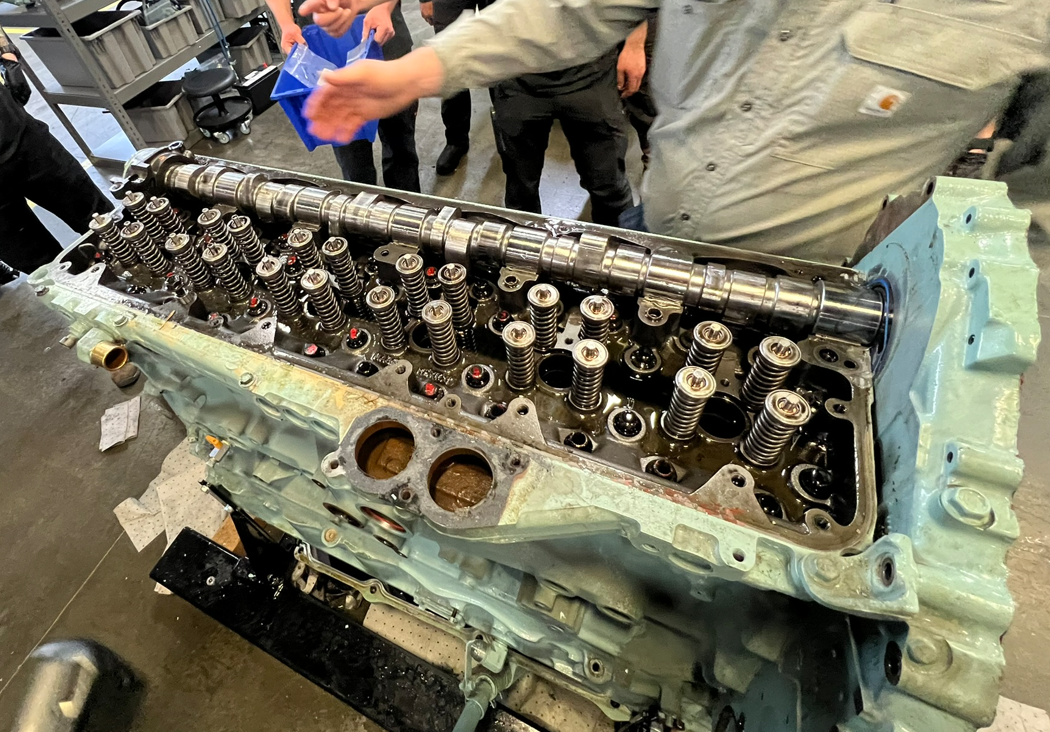
Engine Overhaul Knowledge Capture
Challenge
Retirements among experienced technicians threatened to create knowledge gaps in engine repair, maintenance, and overhaul operations.Approach
Captured critical expertise through interviews, observation, and collaboration with subject matter experts, then transformed it into structured training and technical resources.Outcome
Preserved operational knowledge through training programs, procedures, and certification materials that supported long-term workforce capability. -
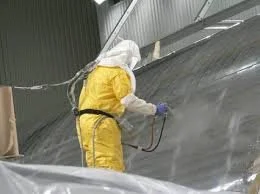
Aircraft Paint Certification
Challenge
Complex custom paint schemes, workforce turnover, and distributed operations created inconsistent performance, increased rework, and longer production times.Approach
Captured best practices from experienced painters and developed standardized training, certification, and performance support resources.Outcome
Improved training consistency, supported knowledge transfer across facilities, and helped reduce rework while increasing operational flexibility. -
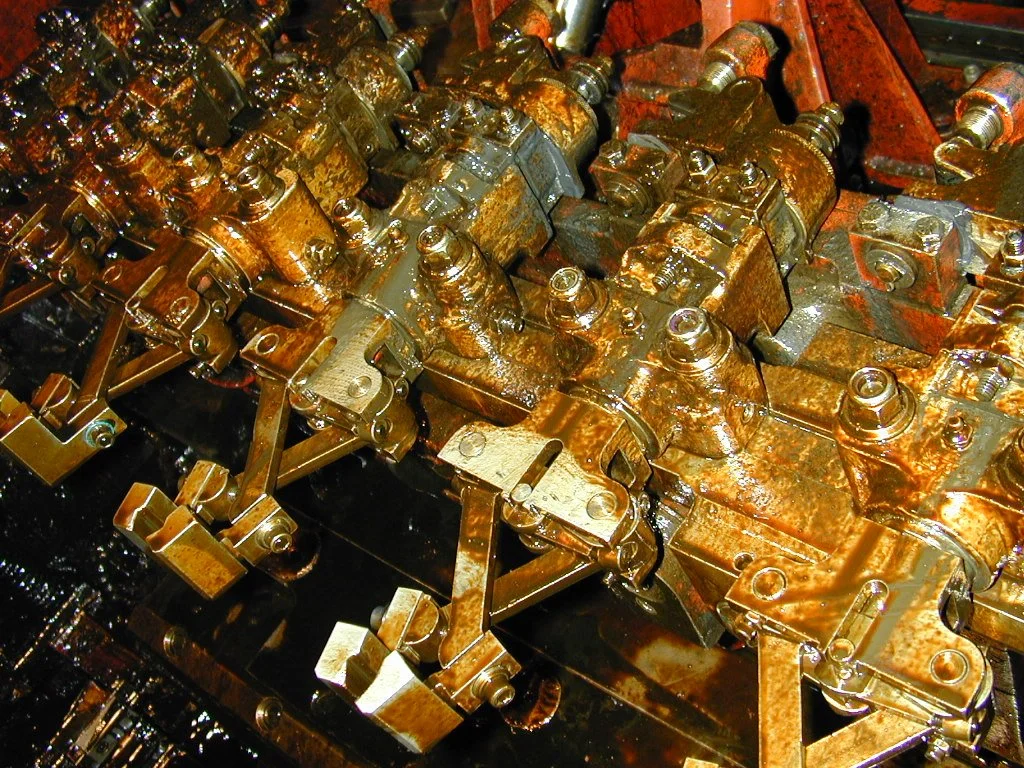
Cold Parts Formers
Challenge
Critical set up, changeover, operation, maintenance, and troubleshooting expertise relied heavily on experienced technicians, creating risk as personnel changed and new employees joined the workforce.Approach
Documented specialized procedures, troubleshooting techniques, and field knowledge to create structured learning resources.Outcome
Provided consistent training materials that preserved expertise, improved onboarding, and supported safe, repeatable maintenance practices.
What Clients Can Receive